
Abstract:
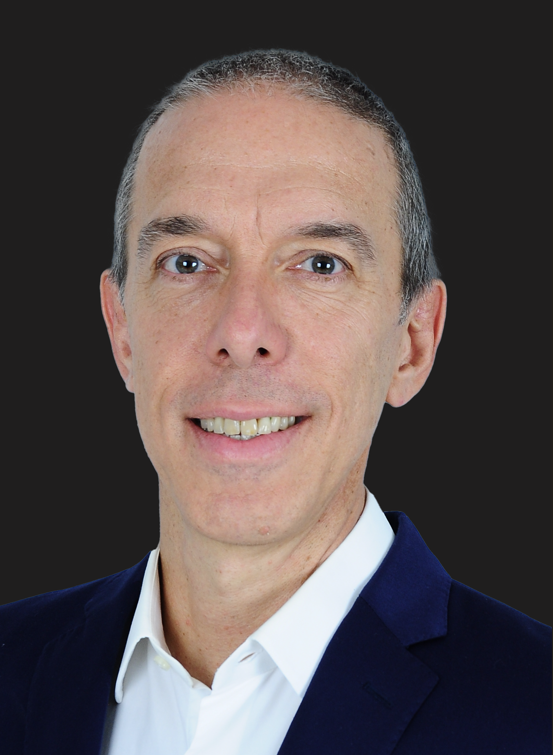
Corruption is often treated as a side-topic in public policy debates, yet in practice it is the line between effective policies that flourish and ambitious reforms that fail. Whether your focus is climate policy, social welfare, urban development, digital governance, or any other policy domain, this seminar will equip you with an essential skill set: recognizing the hidden links between policies and corrupt incentives, understanding the range of corruption-resistant interventions that countries around the world are experimenting with, and gaining insights into the political and institutional realities that shape implementation.
From lobbying and influence practices to outright corruption and money laundering, the seminar will draw on concrete cases, introduce new ways to measure integrity risks, and explore some of the most innovative tools, such as data analytics, corruption risk management, business integrity, and more. Expect a highly applied session that confronts the sometimes uncomfortable truth about what works, what doesn’t, and why.
Join us to discover why integrity competence is not just an academic concern, it is a strategic advantage for every public policy practitioner.
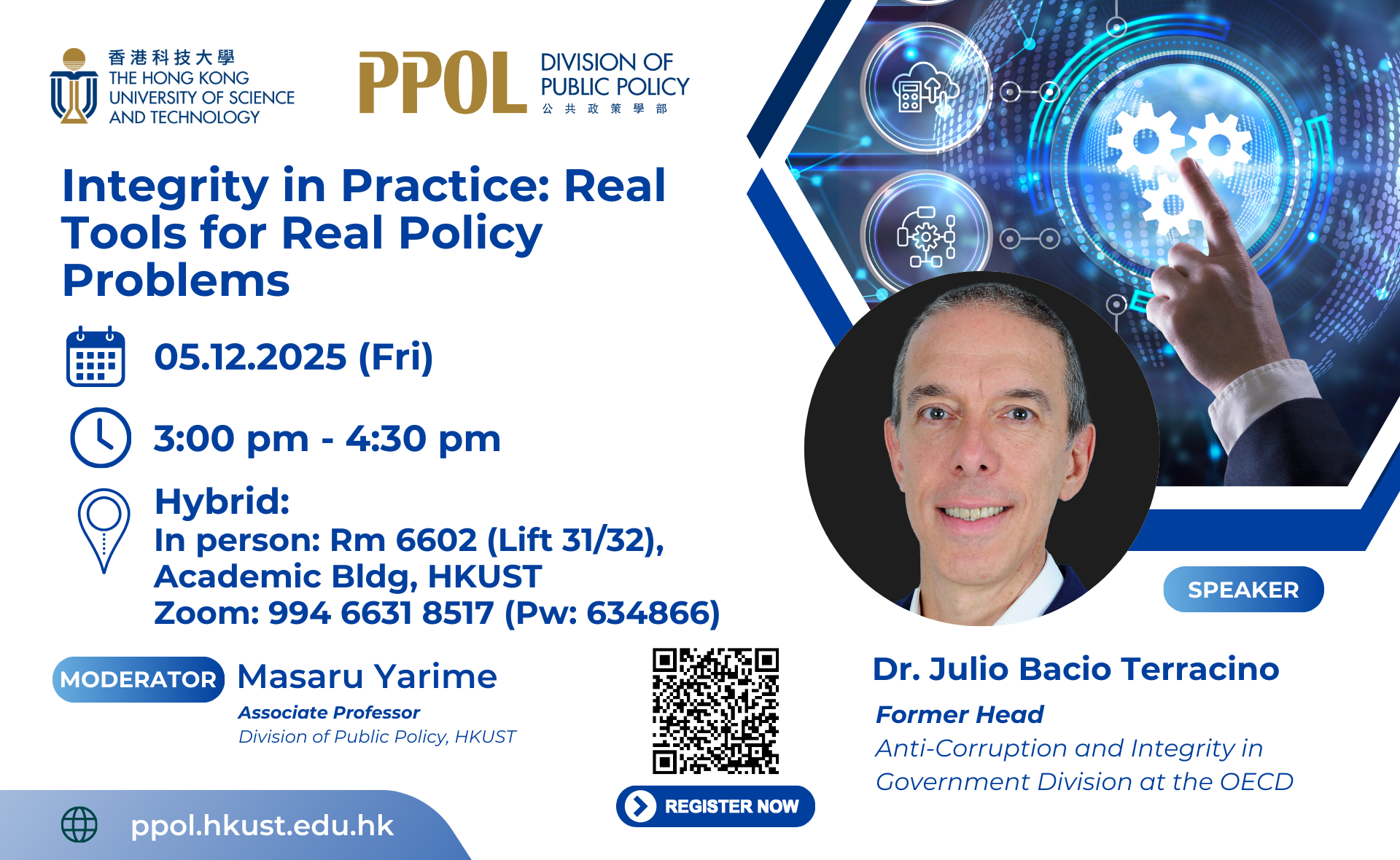
Dr. Julio Bacio Terracino is a a scholar–practitioner in governance, public administration, anti-corruption and integrity, anti-money laundering and information integrity with 20+ years of experience across international organizations, corporates, nonprofits, and NGOs.
Most recently, as former Head of the Anti-Corruption and Integrity Division at the Organisation for Economic Co-operation and Development (OECD), he managed teams to deliver more than 50 international programs advancing public integrity, anti-corruption and AML frameworks, regulatory reform, sustainability, and ESG governance. These initiatives engaged governments, Fortune 500 companies, donor agencies, and civil society across 40+ countries.
Dr. Bacio Terracino has a PhD and Masters degree in International Relations and International Law from the Graduate Institute of International Studies, Geneva, and a Law degree from the University of Buenos Aires, Argentina.
Corruption is often treated as a side-topic in public policy debates, yet in practice it is the line between effective policies that flourish and ambitious reforms that fail. Whether your focus is climate policy, social welfare, urban development, digital governance, or any other policy domain, this seminar will equip you with an essential skill set: recognizing the hidden links between policies and corrupt incentives, understanding the range of corruption-resistant interventions that countries around the world are experimenting with, and gaining insights into the political and institutional realities that shape implementation.
From lobbying and influence practices to outright corruption and money laundering, the seminar will draw on concrete cases, introduce new ways to measure integrity risks, and explore some of the most innovative tools, such as data analytics, corruption risk management, business integrity, and more. Expect a highly applied session that confronts the sometimes uncomfortable truth about what works, what doesn’t, and why.
Join us to discover why integrity competence is not just an academic concern, it is a strategic advantage for every public policy practitioner