

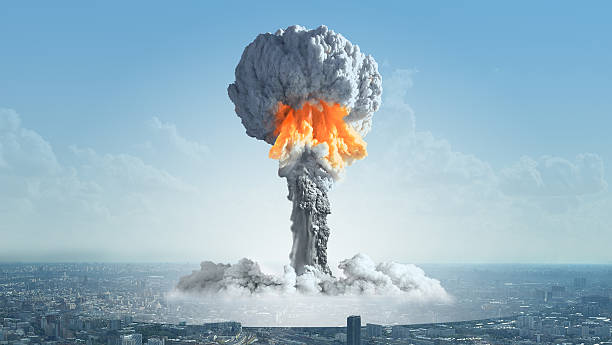
Understanding China's Nuclear Testing Motivations
Beijing, March 11, 2026 — Julien de Troullioud de Lanversin, an assistant professor at the Division of Public Policy at HKUST, has contributed to the ongoing discussion about the existing nuclear tensions by clarifying the reasons that could have led China to possibly violate the current nuclear test ban (allegations made by the U.S. government).
Julien highlights that prior to signing the Comprehensive Nuclear-Test-Ban Treaty (CTBT) in 1996, China conducted fewer than 40 nuclear tests at Lop Nur, significantly less than the over 1,000 tests carried out by the United States. This limited testing history, he argues, might influence China’s considerations regarding future nuclear testing.
With projections suggesting China’s nuclear arsenal could expand from approximately 600 warheads to around 1,000 by 2030, very low-yield nuclear tests could play a role in enhancing weapon designs and ensuring warhead reliability.
Moreover, evidence indicates that China is preparing for the possibility of resuming nuclear testing. Satellite imagery has shown a new laser fusion complex in Sichuan Province, similar to the U.S. National Ignition Facility, along with excavation activities at Lop Nur.
More on the Interview Click Here
About Prof Juliien Click Here